
Where Coachella City Directory Collections Sit
An exact standalone Coachella city directory run is not published by an official source located for the valley. Start with the Riverside County Library System (RCLS) catalog and a Coachella Valley History Museum inquiry, then test regional titles, telephone books, census schedules, newspapers, deeds, and business files. For Coachella researchers, the table separates known holdings from gaps and supplies no first or last directory year without verification.
| Collection | Years | Where Held | Access |
|---|---|---|---|
| Coachella Valley regional archive | over 100 years (museum statement) | Coachella Valley History Museum (CVHM), Indio | appointment; reproduction form/invoice |
| Coachella/valley directories and telephone books | exact run not published | RCLS catalog/Coachella branch; museum inquiry | research gap: shelf audit required |
| Federal census | 1900-1950 for Coachella-era research; earlier territory context | National Archives (NARA)/partner databases | free NARA indexes/resources; licensed images vary |
| Riverside County deeds | 1893-forward county; online index 1974-forward | Assessor-Clerk-Recorder (ACR); older at Gateway | online/office |
| Newspapers/obituaries | title-specific runs not published on branch page | CVHM, RCLS, newspaper databases, Library of Congress | appointment, library or web |
| Business licenses/photos | 100+ year regional archive | CVHM | appointment |
| Sanborn fire-insurance maps | no verified Coachella edition/year | Library of Congress/library subscription | research gap |
The directory and telephone-book row is cautious. An Indio or valley-wide title may help a Coachella family, but it does not prove a separate city edition. Ask for the item record, call number, years held, circulation status, and the process for an on-site scan. A Coachella shelf note should preserve the gap.
Coachella City Directories Follow a Valley Trail
Coachella grew around a Southern Pacific siding and a permanent settlement around 1898, then incorporated in 1946. The official Coachella history explains why early names may sit in railroad, date, citrus, vegetable, irrigation, packing, or shipping records. Coachella's small settlement could appear in a valley, Indio, or Palm Springs-area telephone title, while a grower or merchant might be listed by ranch, tract, route, or company.
- 1893: Riverside County was formed from territory of San Bernardino and San Diego counties, so earlier research may belong to predecessor counties.
- Around 1898: the Southern Pacific siding and permanent settlement anchor the earliest Coachella record story.
- 1946: Coachella incorporated, creating a later city-level trail alongside county and regional sources.
- Directory years: no exact first or last standalone Coachella city directory year was verified, so no publisher run should be invented.
This history changes Coachella search terms. Test a person tied to a crop, railroad, water, packing, or civic group against a regional title. The clue gains weight when its Coachella place and time fit a dated deed, newspaper notice, census household, filing, or museum photograph.
Coachella City Directory Catalog Clues
The Riverside County Library System listing places Coachella Library at 1500 Sixth Street, Coachella, California 92236, phone (760) 398-5148. The published schedule is Tuesday 10-6, Wednesday and Thursday 11-7, Friday and Saturday 10-6, closed Sunday and Monday. The branch page does not list a Coachella city directory run, so catalog and staff checks matter more than a broad web search.
- Search title, subject, and keyword fields for “Coachella (Calif.) directories,” “Indio directory,” and “Coachella Valley telephone directory.”
- Ask Coachella branch staff to check noncirculating local-history shelves and systemwide holdings, not only public keyword results.
- Ask whether local newspapers, school yearbooks, county histories, and licensed genealogy databases can be used on site or with a library card.
- Request the exact Coachella years and physical format before treating a catalog record as a usable directory volume.
Access has more than one channel. The catalog can locate a title, Coachella staff can identify a shelf or related volume, and an on-site license can open a database unavailable from home. Confirm newspaper and genealogy access before a Coachella trip.
Note: A catalog result identifies a resource, but only a shelf audit or staff confirmation establishes the actual Coachella directory years.
Inside the Coachella Valley History Museum Archive
The best documented local collection is the appointment-only Coachella Valley History Museum archive in Indio. It covers more than 100 years and names newspapers, magazines, business licenses, photographs, documents, and records. The archive is at 82616 Miles Avenue; call (760) 342-6651 or write archives@cvhm.org. For a Coachella family, give staff a surname, business or group, decade, crop or industry, street or tract, and desired format.
For the archive scope, appointment process, and reproduction route, consult the Coachella Valley History Museum archives page.
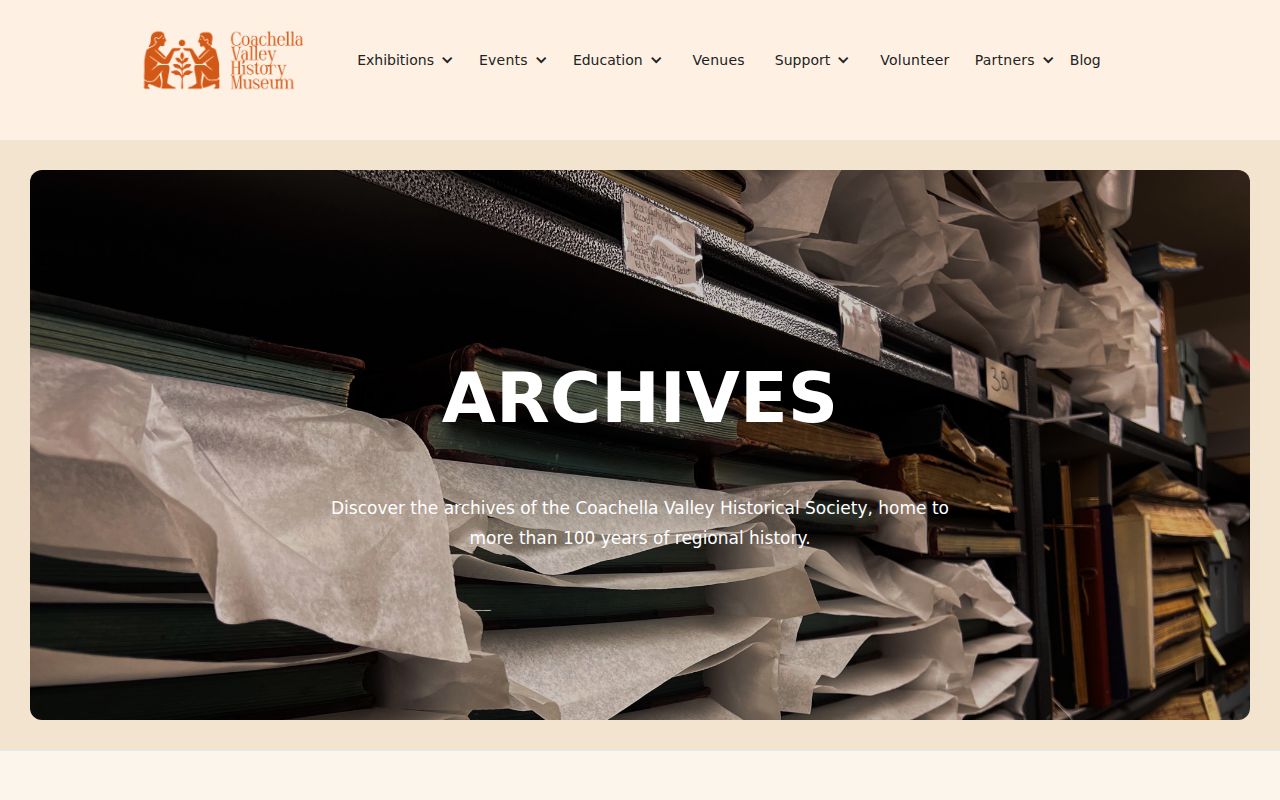
The museum image marks a regional research stop, not proof of a separate Coachella volume. A Coachella appointment may fill gaps with a photograph, newspaper notice, license, family paper, or community record. For Coachella researchers, the request itself should name the record type sought.
How a Coachella City Directory Entry Yields Clues
No digitized Coachella entry was located in an official collection. The inventory is an interpretive aid based on standard conventions, so Coachella researchers must check each point against the scan, title, and abbreviation key. A regional book may use other marks, omit a field, or place a household in a reverse section.
| Name | Surname, given name or initial, with a spouse in parentheses when printed. |
|---|---|
| Status clue | Widow notation or a householder mark, only when the volume supplies it. |
| Occupation | The work label printed by that volume, which can help separate people with the same name. |
| Address | Coachella house number and street, rural route, or business location; “r” marks residence and “b” marks business in the research guidance. |
| Householder mark | Record a printed owner or householder mark; do not infer occupancy from a blank field. |
| Abbreviation key | The volume-specific list that explains short forms and symbols. |
- Criss-cross directory
- A reverse section arranged by street, house number, occupant, or telephone, rather than only by surname.
- Householder index
- A name or household listing that points to the address or entry; its scope depends on the volume.
- Abbreviation key
- The source's own explanation of marks and short forms. Read it before expanding any term.
A Coachella criss-cross listing can turn a street clue into a family clue, but it remains a point-in-time record. It can show who was listed at a place without proving ownership, length of stay, or kinship. Keep the key, full entry, page number, and volume title together. Coachella researchers should retain the original mark.
Coachella Business Records Bridge Directory Gaps
A missing directory year does not end a local trail. City Clerk and Development Services records can identify permits, applicants, owners, contractors, inspections, and certificates of occupancy; older completed or expired projects may leave current reports. Coachella requests go through NextRequest. Name the business, address or parcel number (APN), department, date span, and record type. The Civic Center is at 53990 Enterprise Way.
Coachella business filings add another bridge. The Secretary of State (SOS) bizfile search connects a business name or entity number to status, jurisdiction, addresses, agents, and filings. Riverside County fictitious business name records identify fictitious business name (DBA) registrants, while the Department of Consumer Affairs (DCA) search separates a license record from a directory listing. A filing address is not automatically a home address.
| Source | Search or record fields | Directory bridge |
|---|---|---|
| SOS bizfile | business name or entity number; entity type/status, jurisdiction, addresses, agent, filings | identifies the legal entity behind a Coachella name or address |
| ACR Fictitious Business Name | name, registrant, filing controls, statements, dates | identifies a DBA registrant connected to a Coachella business clue |
| DCA Search | first/last/business name, license number, city/county, board/type | checks whether a named license record matches Coachella context |
The business-search screen below is a filing lead, not a directory page. Use its Coachella name or date to compare the museum archive, a newspaper, a permit file, or the next available volume.
See the California business entity search for the official lookup route.
The business image shows how a legal-entity result can supply a Coachella name variant or address trail when a printed volume is missing.
How Census Years Anchor Coachella Households
Federal schedules give a directory trail a time check. Census records from 1900 through 1950 are public under the 72-year rule; the 1960 census opens in 2032. The National Archives census route is the federal access point, though partner images may have other terms. Match a Coachella name to the nearest public year, then compare household members, age, birthplace, occupation, and place.
Older Coachella households may use an enumeration district, rural route, township, tract, ranch, or irrigation district instead of a street number. Before 1893, Coachella land and federal research can require San Bernardino or San Diego predecessor-county context. A census match tests spelling, age range, and family fit, but does not prove that every listed person shared one home at the same moment.
For a visual starting point, use the National Archives census collection page before pairing the result with a local volume.
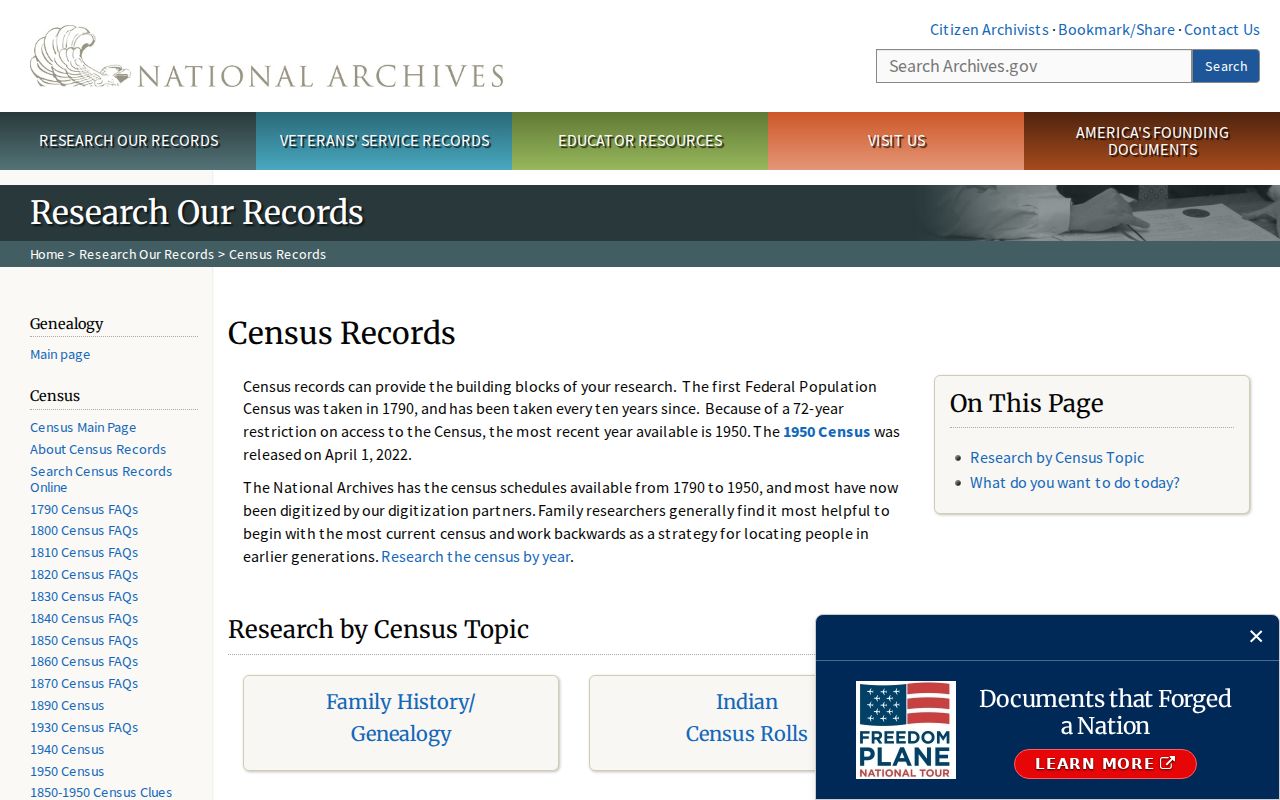
Keep the Coachella census year, enumeration context, and source image beside the Coachella family clue.
Tracing Coachella Households Through Directory Years
Coachella household tracing works best as small checks. Start with the strongest spelling and place, then let each available year suggest the next search. Deeds can distinguish an owner from a listed household, while an obituary or probate file can explain a disappearance. Keep each clue tied to a dated source.
- Set the anchor. Write the full name, likely spouse, known Coachella address or rural route, and one nearby census year. Keep compound surnames and both surname orders.
- Find the first entry. Search the exact name, initials, married name, spacing, hyphen, diacritic, and Anglicized forms. Record title, year, page, address, occupation, and marks.
- Follow movement. Check the next volume and note a new Coachella street, route, business, spouse, widow notation, or household change.
- Pair the gaps. Compare the Coachella entry with 1900, 1910, 1920, 1930, 1940, or 1950 census entries, using predecessor counties before Riverside County.
- Close the trail. Test a Coachella obituary, cemetery record, probate file, deed, business filing, or museum item, and label clue versus proof.
Disappearance can mean a move, death, married-name change, rural route, omission, or family form. Keep Coachella compound surnames in both orders; test spacing, hyphens, initials, diacritics, married names, rural routes, and older Coahuilla or Conchilla place forms. AB 64 permits specified diacritics on new or amended California vital records, while the 2026 fee list gives $31 birth, $26 death, $19 marriage, and $18 dissolution copies. Compare the newer form with older Coachella print, and use the California vital-record fee page for the current route. For a current address, the Coachella street directory workflow uses address-keyed records; a Coachella resident lookup handles one-person verification.
Newspapers and obituaries can connect Coachella relatives, but an obituary is not a vital certificate. FamilySearch catalog entries may lead to Riverside or predecessor-county deeds, probate, marriage, and naturalization material; images may require an account, center, or affiliate library. The Library of Congress Sanborn fire-insurance map collection has no verified Coachella edition or year, so inspect any result and keep that gap visible. Under the California Public Records Act (CPRA), Coachella city staff ordinarily determine availability within ten calendar days, with an extension for unusual circumstances, and need not create a new Coachella city directory.