
Where Coachella Previous Residents Appear
Trace one Coachella address across owner, occupant, and context records. Start with the current APN, then separate Coachella deeds and assessments from directories, census, museum, and city files. Coverage overlaps but does not match. The Coachella directory run and local Sanborn edition remain unverified.
| Source | Years It Covers | Where Held | What It Shows |
|---|---|---|---|
| Coachella ACR deed index | 1974-present online; 1975-present office computers | ACR Self-Service and terminals | Transfers, parties, dates |
| Coachella Gateway Riverside deed books | 1893 county creation onward; series varies | Riverside ACR | Pre-online chain |
| Coachella assessment roll | Current and historical retention varies | ACR office | Owner, mailing, situs, values |
| Directories and telephone books | Exact Coachella run not published | Coachella Library/RCLS; CVHM | Occupant and address clues |
| Coachella-era census schedules | 1900-1950 public | NARA and partners | Household, relationship, occupation |
| Permits and code files | Digital cutoff not published | Development Services; NextRequest | Construction and parties, not occupancy |
| Newspapers, obituaries, probate | 100+ year archive; probate mostly July 1994+ | CVHM, RCLS, Superior Court | Moves, death, heirs, estates |
| Sanborn maps | No verified local edition or year | LOC or library subscription | Building footprint or use if found |
For Coachella, deeds show transfers; assessment rolls show owner and tax mailing; directories and census add household clues. Permits date construction, not occupancy. Probate, obituaries, and newspapers can close a trail.
The Riverside ACR copy instructions show Coachella researchers the official path from an index to a requested document. An index hit and a usable copy are separate steps.
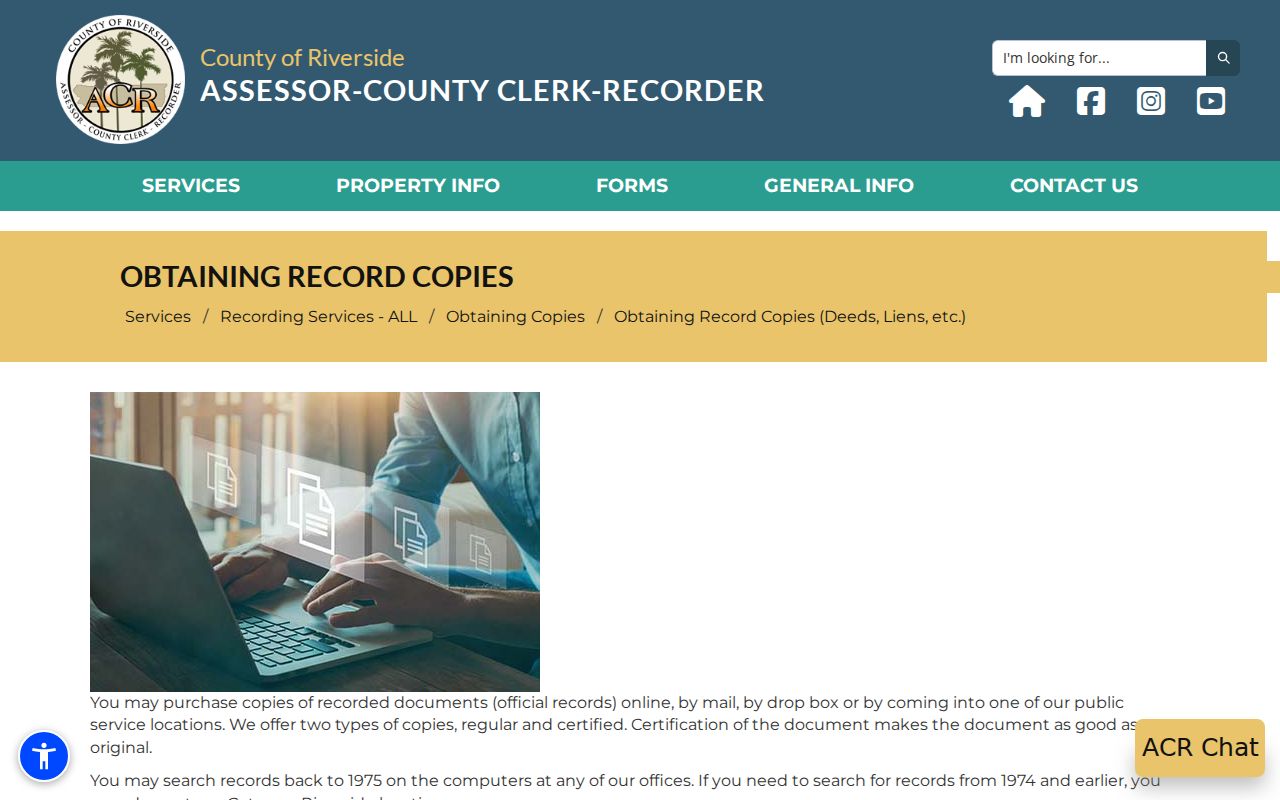
A copy lets a party name be checked against the deed's legal description and recording details.
Coachella's Deed Trail for Previous Residents
The current APN anchors a Coachella house history. The Coachella assessor search accepts an address, APN, or assessment number/PIN and returns situs, legal-description fragments, values, land use, building details, and maps. It does not display the owner online. Ownership inspection is office-only under Revenue and Taxation Code section 408.
Obtain the owner lawfully at the counter, then search the recorder by party name. It is not address-keyed, so match the legal description and recording details before accepting a common-name result.
- Enter the Coachella address in the assessor portal and save the APN, PIN, situs, and legal-description fragments.
- Inspect the assessment roll at an ACR office and note the owner and tax-mailing address.
- Search that owner as grantee in the recorder index, narrowing by date, document type, or number.
- Read the acquisition deed, search its grantor as an earlier grantee, and match APN or legal description.
- Repeat backward until the online cutoff, then use the older index or deed books at Gateway Riverside.
These steps turn a present parcel into a chain of named instruments without treating ownership as proof of occupancy.
- Grantor and grantee
- The grantor transfers an interest; the grantee receives it. In a purchase deed, they are usually seller and buyer.
- Chain of title
- The linked sequence of recorded transfers connecting a present interest to earlier instruments.
- Legal description
- Lot, block, tract, or metes-and-bounds wording that can outlast a street label.
- Criss-cross directory
- A street-and-number reverse directory showing listed occupants or subscribers, not a full household count.
Deeds identify transfers, not every person who lived in the house. Keep owner and household trails separate.
Coachella's 1974 Recorder Boundary
The Coachella recorder trail reaches an online index beginning January 1, 1974, while clerk documents are indexed from January 1, 1893. They are different systems: a clerk result is not automatically a deed, and the online start is not the beginning of county land history.
| Recorder search field | How it works |
|---|---|
| Filing Date Start and End | mm/dd/yyyy date text; recorder range begins January 1, 1974. |
| Name or Title | Exact or wildcard; exact names are last name first, without punctuation. |
| Document Number | Exact recorded or filing number when known. |
| Search Type | Exact Match or Wildcard; wildcard ignores word order. |
Coachella deed results show document number, recording date, title or type, party names and roles, and page count or order options. Office terminals show images; web users order copies. Use the legal description to confirm the address connection.
The Coachella Riverside County ACR records site separates assessor, clerk, and recorder functions, helping prevent a parcel search from being mistaken for a deed search.
This boundary keeps a blank online result from being mistaken for proof that an earlier deed or household record never existed.
Gateway Riverside for Coachella Past Owners
For Coachella pre-1975 deed work, ACR computers reach back to 1975, but 1974 and earlier research is at Gateway Riverside. Palm Desert ACR, 38686 El Cerrito Road, is the nearest eastern-county counter, not the older-holdings substitute. Verify appointment and hours before traveling.
Coachella copies ordered online are mailed, with average processing listed at 48 hours and a 2.15% card fee. A regular or certified copy costs $8 for the first page, $1 each additional page, and $2 for certification. Mail applications go to Riverside County Clerk-Recorder, Attn: Certified Section, P.O. Box 751, Riverside, CA 92502-0751; processing is estimated at one to two weeks.
A Coachella pre-1976 search without a document number needs type or title, complete names, and an estimated recording date. Staff use a two-year window. Terminals show images; mailed copies test parties and legal descriptions against the APN.
The Coachella ACR office locations list shows why the nearest counter and oldest index are not the same place.
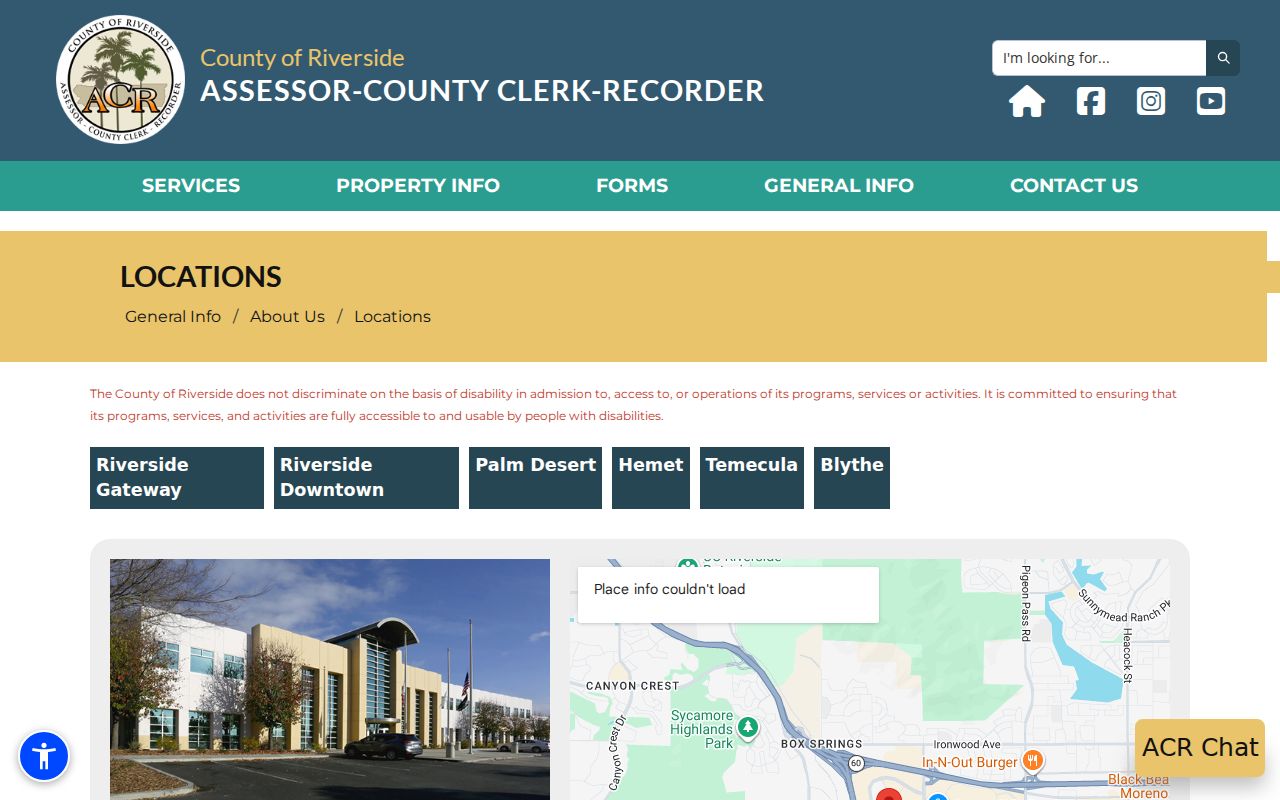
Plan the office route from the deed year, not the current address alone.
Coachella Past Households: Directories, Census, Obituaries
Owners are only half of the trail. A directory or telephone book can place a listed person at an address even when a deed names someone else. The exact Coachella run is unpublished, so search the Coachella Library/RCLS catalog for “Coachella (Calif.) directories,” “Indio directory,” and “Coachella Valley telephone directory,” then ask staff to check noncirculating and systemwide holdings. Databases may require a card or on-site access.
The broader Coachella city directory collection notes belong with the historical shelf. The Coachella Valley History Museum archive offers an appointment repository spanning more than 100 years, with Coachella newspapers, business licenses, photographs, documents, and family files.
Coachella newspapers in the California Digital Newspaper Collection, Chronicling America, and The Desert Sun add movement and kinship clues. Obituaries can connect a deceased person to relatives, former communities, funeral homes, or cemeteries, but corroborate them with a deed, probate file, or death record.
Lawful use. Previous residents research in Coachella serves house history, family history, estate work, and personal curiosity. Do not use names or addresses to stalk, harass, track, or harm a living person.
Census Pairing for Coachella Households
Federal population schedules through 1950 are public under the 72-year rule; 1960 becomes public in 2032. Early Coachella entries may use an enumeration district, rural route, township, tract, ranch, irrigation district, or cross-road instead of a modern street number. Pair a census name with an address clue, directory line, parcel, or family relationship before attaching it to one house.
- Choose a matching public schedule: 1900, 1910, 1920, 1930, 1940, or 1950.
- Search compound surnames, initials, spacing, hyphens, diacritics, and married names.
- Compare the enumeration district and route wording with a directory or telephone book.
- Mark a supported match, unresolved lead, or gap before moving to deeds, newspapers, probate, or museum files.
For Coachella, search FamilySearch for Riverside and predecessor San Bernardino or San Diego counties. Images may need a free account, FamilySearch Center, or affiliate library; browsable is not fully name-indexed. NARA covers census, naturalization, and military material.
Railroad-Era Clues to Coachella Addresses
Coachella grew from a Southern Pacific siding, with permanent settlement around 1898 and incorporation in 1946. Early records may follow railroad, date, citrus, vegetable, irrigation, or farm terms rather than a later house number. A grower, packing reference, route, or tract can bridge a rural record to a present parcel.
Search “Coahuilla” and “Conchilla” as well as Coachella. Harrison, Jackson, Van Buren, Grapefruit Boulevard, and numbered avenues such as 50, 52, 54, and Airport Boulevard help triangulate a parcel. No dated citywide renumbering has been proven.
Riverside County did not exist before 1893. Earlier Coachella evidence may be in predecessor San Bernardino or San Diego material, so a failed street search needs a county check.
Note: Coachella's rail and farm origins make tract, route, and crop terms useful when a street number is absent.
Coachella Permits and Past Households
Permits and code files date construction, additions, inspections, notices, and named applicants or contractors. They do not establish occupancy. Coachella Development Services keeps city files, but completed or expired projects leave current reports. A narrow request through Coachella NextRequest can seek existing permits, inspection cards, certificates of occupancy, or code notices for an older APN. Under California's Public Records Act, Government Code §§7920.000 et seq., a reasonably described existing-record request ordinarily receives an availability decision within 10 days, with a possible 14-day extension; an agency need not create a resident directory.
Coachella tax records run through a Treasurer-Tax Collector portal that accepts an assessment number and shows charges, installments, penalties, and payments. It is not a resident roster; a tax mailing address is only a correspondence destination.
The Riverside Treasurer-Tax Collector lookup shows that separate tax-bill route. The image helps keep payment history apart from household evidence.
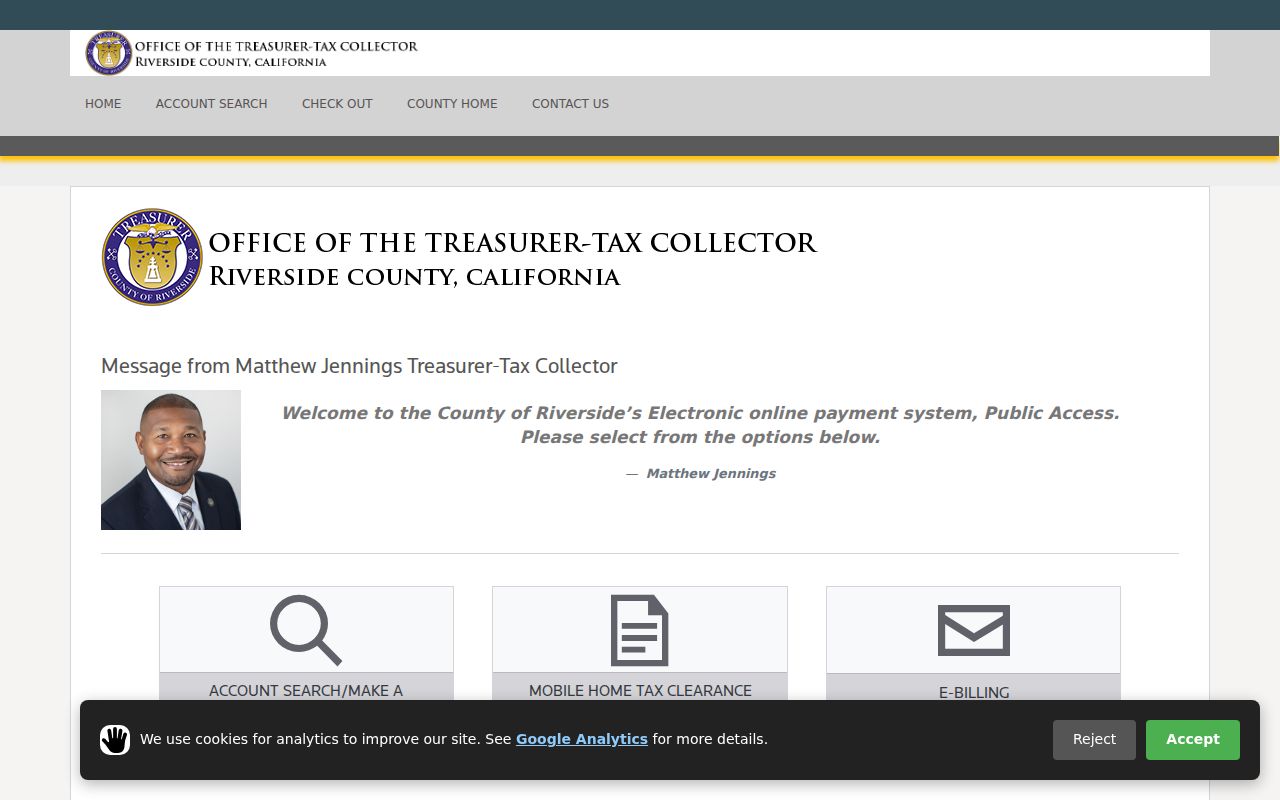
For a Coachella estate, probate can close a past resident's trail when property changes hands. Riverside Superior Court places nearly all probate cases from July 1994 forward online; older files require a clerk search. Petitions or notices may name an heir or personal representative, while sealed material stays unavailable.
Federal Court Checks in Coachella House History
A Coachella court hit corroborates a trail but does not prove residence. Riverside Superior Court handles civil, family, criminal, and probate matters. Its name index uses paid credits; a register needs a case number. Party role, date, and court location can separate same-name people; sealed, confidential, or purged records may be absent.
A Coachella federal search uses PACER only. Search its Case Locator by party or case, then review the docket. The research lists $0.10 per page, a $3-per-document cap, and quarterly waivers when use is $30 or less; confirm the current schedule. PACER does not include Riverside state cases.
The official PACER access page explains the federal route. A Coachella federal docket can add a dated name or role, but cannot replace a Riverside deed, census, directory, or probate link.
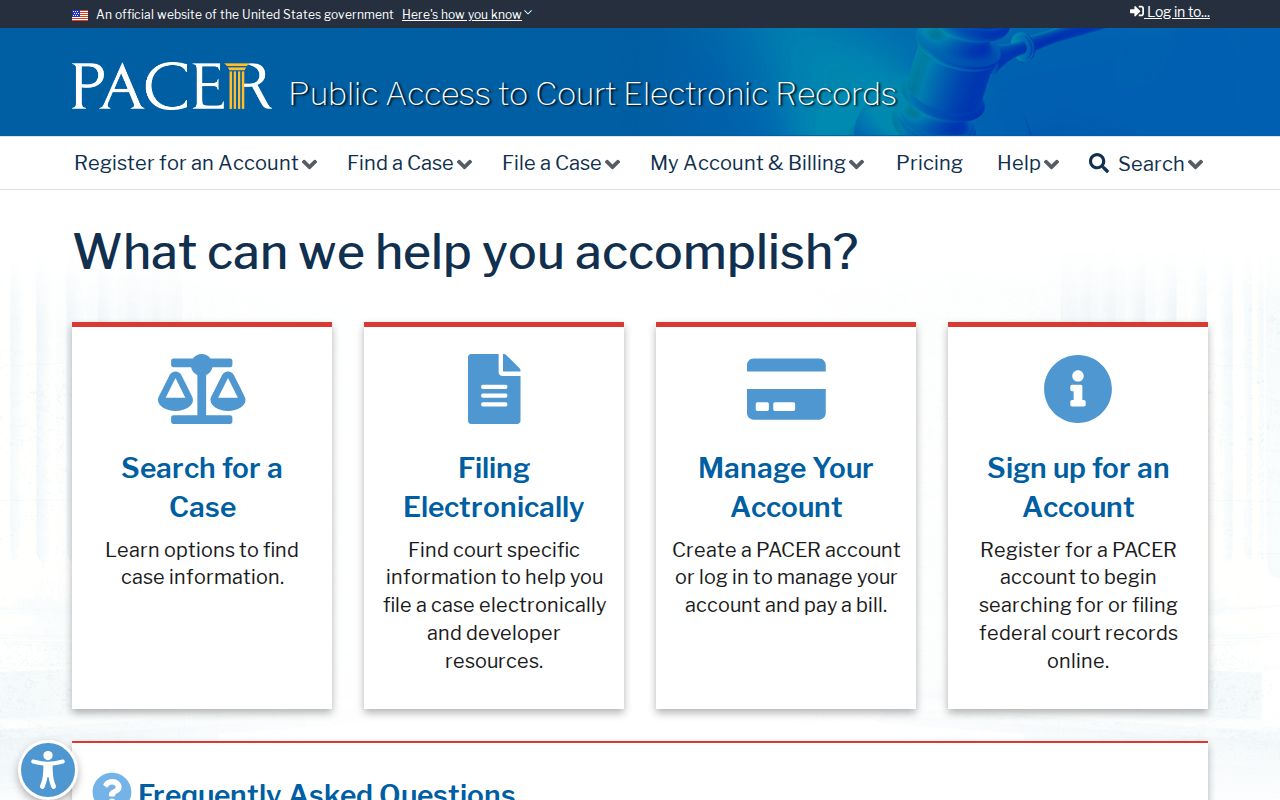
Keep federal results separate until an independent public record supports the address connection.
Lawful Coachella House History
Preserve each Coachella address's APN, legal description, situs, mailing address, tract, route, and directory form. City, county, and sphere boundaries differ. No official renumbering year or full formula was found. Use the Coachella APN, legal description, historic maps, and jurisdiction layers instead of guessing.
Sanborn maps may date a building footprint or use, but no direct Coachella edition or year was verified. Search the LOC Sanborn collection for Coachella and Indio and label any result by city, sheet, edition, and year. A missing scan does not prove a missing household record.
Keep ownership, household, and life or construction events in separate trails. Dates, names, and legal descriptions agreeing across them make a match stronger.
House-history boundary. Use Coachella house-history records for family history, estate and heir research, a building's past, and lawful curiosity. Do not use names, addresses, or record details to stalk, harass, track, or harm anyone.
Note: Older Coachella records may require predecessor-county files, Gateway Riverside, museum appointments, or library shelf checks; no online index spans every era.