
How to Find Coachella Residents
There is no single public roster of every person in Coachella. An assessor parcel record may identify an owner, but not every person connected to the address. A recorded deed shows parties to a transaction. A court index shows a case role, not a home. A directory or obituary can place a household in time, yet it still needs corroboration. The useful question is not simply who appears in a search. It is which custodian can answer the narrow question at hand.
Begin with the strongest anchor you have. An address can lead to an APN, then to an assessment roll and a deed name. A full name can lead to a court case, business filing, license, or probate file. A date and family relationship can narrow a vital-record request. The steps below keep those trails separate and create a record of what each result actually proves.
For a birth-copy request, the California certified-copy application route sets out the VS 111 and sworn-statement process; the Riverside ACR vital-records page covers county birth, death, and marriage ordering.
- Resolve the Coachella address in Riverside Assessor Online Services and save the APN, situs, and legal-description details.
- Use the assessment roll at a Riverside ACR office when an owner name or tax-mailing destination is needed.
- Search that name in the Riverside recorder index, then compare parties, dates, document type, and legal description.
- Run the appropriate Riverside Superior Court, vital-record, business, license, or archive search for a second anchor.
- Use Coachella NextRequest or a custodian form for an identifiable existing record that is not online.
Note: A search result is a lead until a second record confirms the same person, place, date, or legal description.
Coachella Resident Records Offices
Coachella is an incorporated city within Riverside County, so its resident-record trail crosses city, county, and state lines. The City Clerk keeps minutes, resolutions, ordinances, agreements, and other municipal writings. Coachella Development Services holds building and code material for work inside city limits. Riverside County Assessor-County Clerk-Recorder handles the parcel, assessment, deed, fictitious-business-name, marriage, and recording trail. Civil, criminal, family, and probate cases belong to Riverside Superior Court, not the County Clerk.
The nearest eastern-county counter listed for ACR work is the Palm Desert office, while older deed research before the online boundary is routed to Gateway Riverside. The Riverside court locations in Indio serve the eastern valley. This geography matters: a Coachella question may require a city request, a county counter visit, an Indio court search, and a state form.
Riverside County ACR Recorder
Recorded deeds, liens, releases, maps, notices, clerk filings, and copy orders.
Riverside County Assessor
Address, APN, and PIN parcel search online; assessment-roll ownership is inspected at an office.
Riverside Registrar of Voters
California voter status is an authenticated self-lookup. Qualified file access has a separate purpose review.
The Riverside ACR document-search portal shows the party, date, document, and copy-order route for recorded instruments.
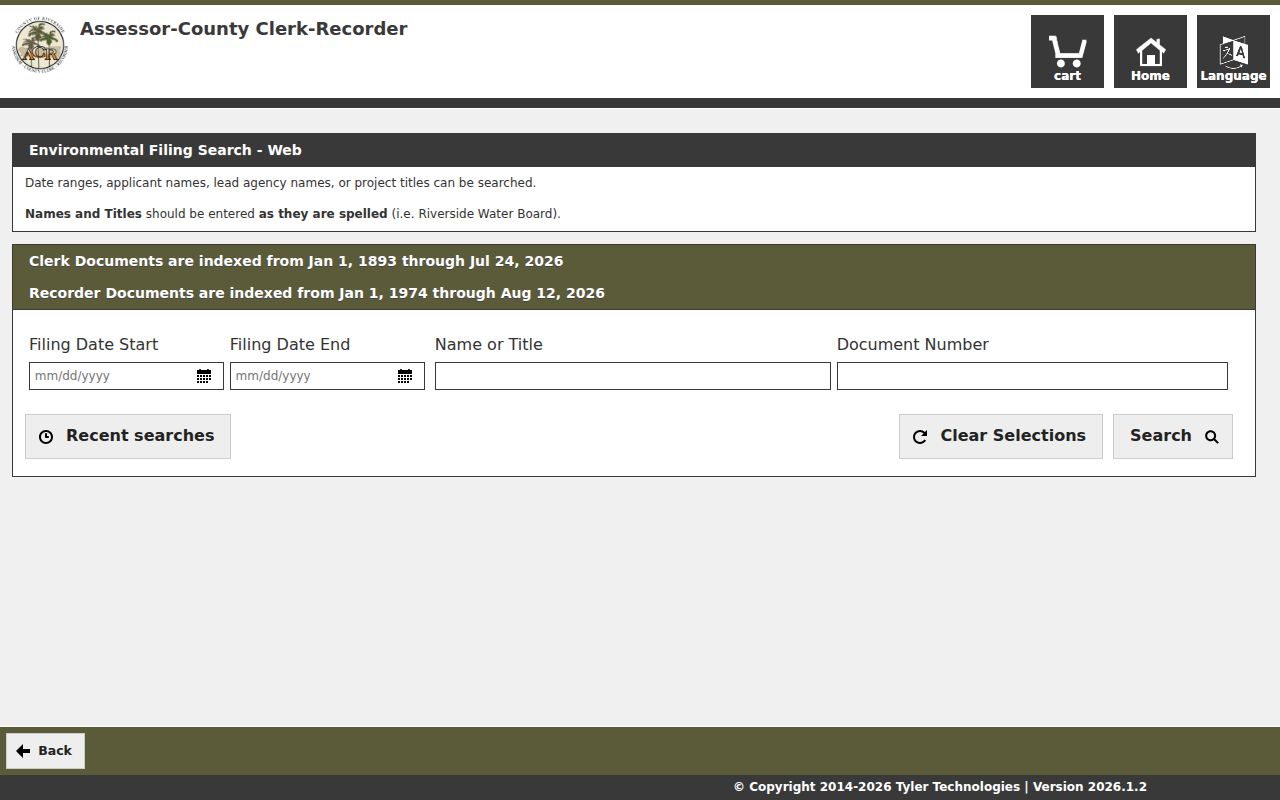
The offices answer different questions. The ACR parcel search finds the parcel, the roll can show the owner at inspection, and the recorder links names to instruments. The City Clerk can locate civic participation, but an agenda name is not proof of residence. The registrar can confirm a person’s own registration status, not a neighbor’s address. Keeping those distinctions visible prevents a directory search from becoming a guess.
Coachella Addresses Become Parcels
Riverside Assessor Online Services is the cleanest first move when the only clue is a Coachella street address. Its search choices are Assessment Number, also called PIN, APN, or Property Address. The PIN instructions call for the first nine digits without the dash and final digit. The result can show an APN or PIN, situs, legal-description fragments, land use, assessed land and improvement values, tax-rate area, building characteristics, valuation history, and map views.
That online result stops short of an owner-name search. Riverside’s ACR FAQ says ownership is not displayed on the web, although a member of the public may inspect the assessment roll at an office under Revenue and Taxation Code section 408. A mailing address on that roll is where tax correspondence goes. It is not, by itself, proof that an owner lives at the situs. For the named street walkthrough, use the Coachella street directory page when the goal shifts from one parcel to the surrounding address chain.
| Assessor field | What to enter or read |
|---|---|
| Assessment Number / PIN | First nine digits, with the displayed dash and final digit omitted. |
| APN | Use the parcel number format shown by Riverside’s form. |
| Property Address | Street number and street name, such as a numbered avenue or named road. |
| Parcel result | APN, situs, legal description, values, characteristics, and map context. |
Note: The assessor portal resolves an address to a parcel, while owner inspection happens through the assessment roll at an ACR office.
Why the Online Owner Search Stops
Riverside’s split between parcel facts and owner inspection is a useful Coachella-specific quirk. The web form can help identify the right parcel without publishing a name list. At the counter, the assessment roll can be inspected by address or APN. That sequence protects the difference between a property record and a resident directory. The roll may show an owner and a tax-mailing destination as of the roll date, but it does not list every household member or prove who is present today.
Once a lawful research purpose calls for a deed trail, use the owner or party name in the ACR document search. The recorder index is keyed by party, date, document number, and title. It is not an address search. Read the legal description and recording date before treating a deed as connected to the parcel. If the online owner search appears to fail, that is a limitation of the county’s design, not evidence that the parcel has no owner record.
Riverside explains the online ownership boundary in its Assessor FAQ. The capture shows why a Coachella address search should begin with an APN and continue at the assessment-roll counter.
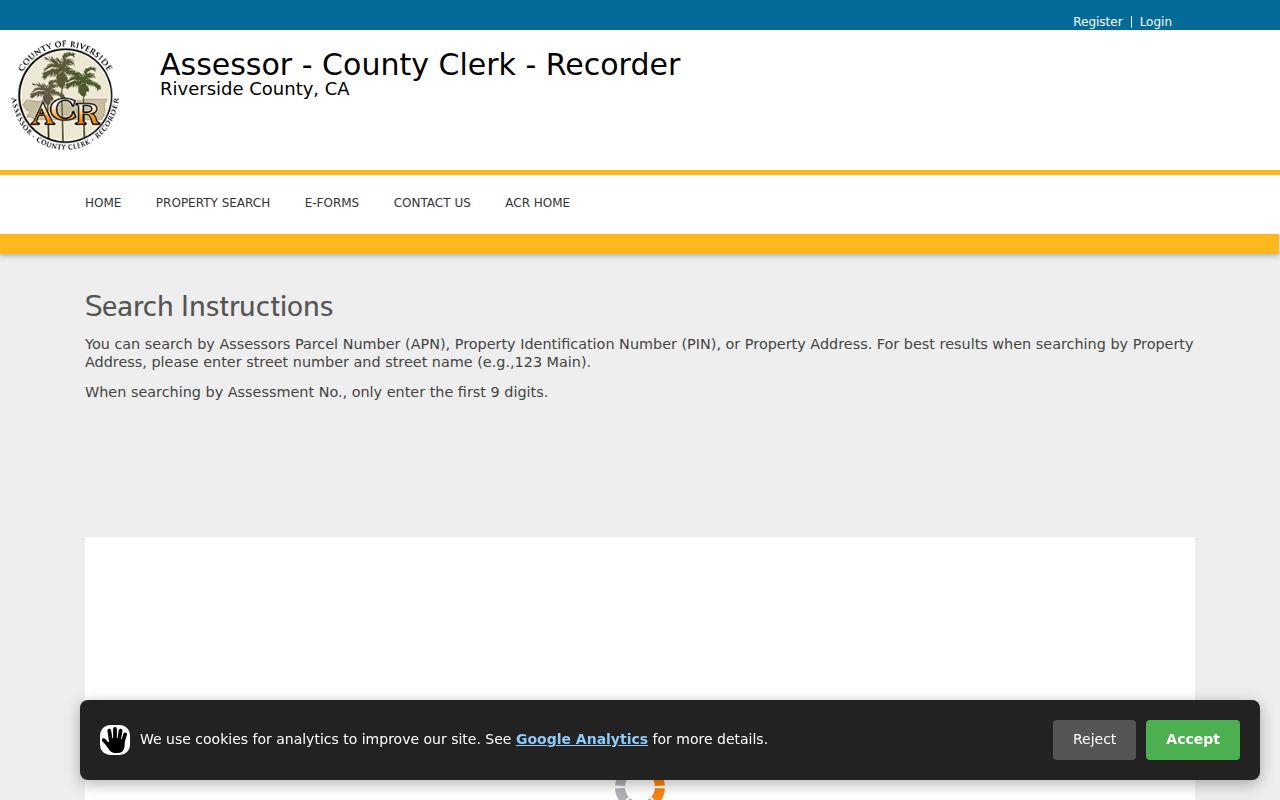
Use the displayed parcel facts to avoid false joins. A similar street name, a mailing address in another city, or an old legal description can point to a different parcel. The legal description and APN are the better bridge into a deed index.
Current Coachella Resident Directories
The current Coachella residents directory is better understood as a set of partial sources. Each row below lists people or roles for a different reason. None should be expanded into a citywide household roll. The most reliable workflow identifies what a source covers, records its date, and checks its custodian before drawing a conclusion.
| Source | What it may show | Keeper | Access |
|---|---|---|---|
| Assessment roll | Owner and tax-mailing destination for a parcel | Riverside ACR Assessor | Office inspection; parcel facts online |
| Recorded documents | Grantors, grantees, document type, date, legal description | Riverside ACR Recorder | Free index; copies ordered or viewed at an office |
| Voter status | One registrant’s status, polling place, and ballot details | California Secretary of State | Authenticated self-lookup |
| City files | Applicants, officials, contractors, permits, and civic participants | Coachella City Clerk / Development Services | Online request or department contact |
| Business and license indexes | Entity, agent, license, filing, and discipline details | California SOS / DCA / ACR Clerk | Online indexes with field-specific limits |
| Archives and directories | Past addresses, occupations, families, organizations, and local context | Library, CV History Museum, NARA | Catalog, appointment, or partner access |
| Unclaimed property | Former reported name or address | California State Controller | Free name search; claim requires proof |
A city staff listing can locate an official in an organizational role, but not a private household. A business filing identifies a registered agent or filing address, which may be commercial. A court case supplies a name and role, not a residence. The Riverside court public-access instructions are useful when the question is a case, while the assessor and recorder remain the land-record sources.
California Voter Status Is Self-Check
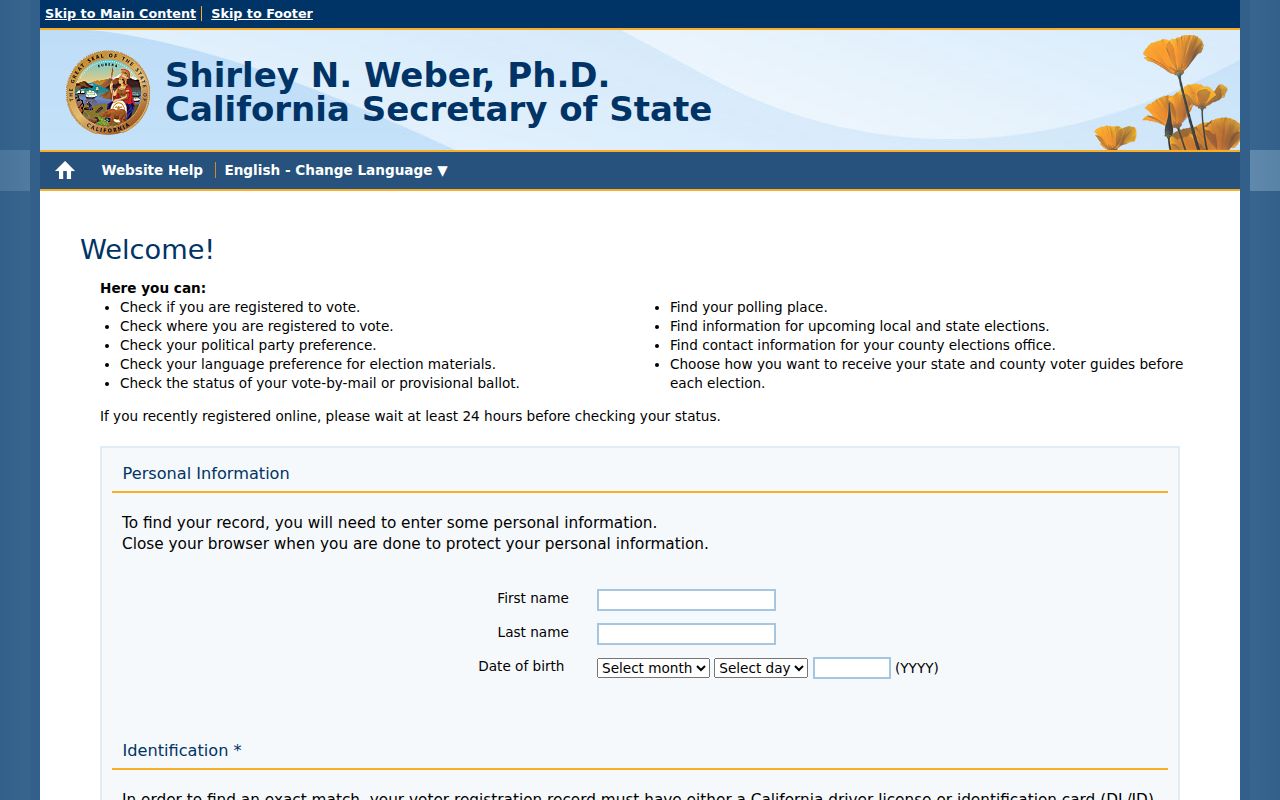
California’s My Voter Status tool is often mistaken for a public resident directory. It is not. The registrant supplies a first name, last name, date of birth, and one identifier path using a California driver license or identification number or the last four digits of a Social Security number. The returned account information can include registration status, party preference, language preference, polling place, upcoming elections, county contact, and ballot or guide-delivery details.
Elections Code section 2194 restricts registration information, including personal, private, and commercial uses, harassment, advertising, solicitation, and Internet republication. Qualified election, scholarly, journalistic, political, or governmental use has a separate request route through the Secretary of State or county official. Driver-license data, Social Security digits, signatures, and unique voter identifiers are confidential. Protected voter provisions under sections 2166 through 2166.9 can withhold an address.
| My Voter Status field | Role in authentication |
|---|---|
| First and last name | Exact identity entry for the registrant. |
| Date of birth | Month, day, and year selectors used to authenticate the account. |
| California DL or ID | One identifier route, with a no-DL/ID option. |
| SSN suffix | Alternative identifier route using the last four digits. |
| Returned status | Registration, polling place, election, ballot, and contact information for that voter. |
The California My Voter Status form illustrates the authentication fields. Its layout supports a private self-check, not a neighbor search.
Note: A California voter-file request requires an approved purpose and does not turn registration data into a private Coachella street list.
When a Court Name Needs a Match
Riverside Superior Court is the local court source for Coachella. The Indio Larson Justice Center is the practical eastern-valley venue for many matters, but venue must be checked with the court. Its public portal separates Index, Register of Actions, Calendar, and Documents. An index name search consumes account credits. A register-of-actions search needs a case number. A calendar search covers current and future dates up to seven days. Documents require a case number and a fee, and access is limited by court rules.
A result can show a case number, title, type, filing date, status, party roles, court location, event descriptions, future hearings, and department. That is a useful lead, not proof that a same-name party is the Coachella resident being sought. Compare a filing date, known relationship, parcel information where lawfully visible, or a business affiliation. Probate can identify a personal representative or heirs, while restricted, sealed, juvenile, adoption, and confidential family material may not be available.
The Riverside Superior Court public-access page shows the court route for case research in Coachella and the eastern valley.
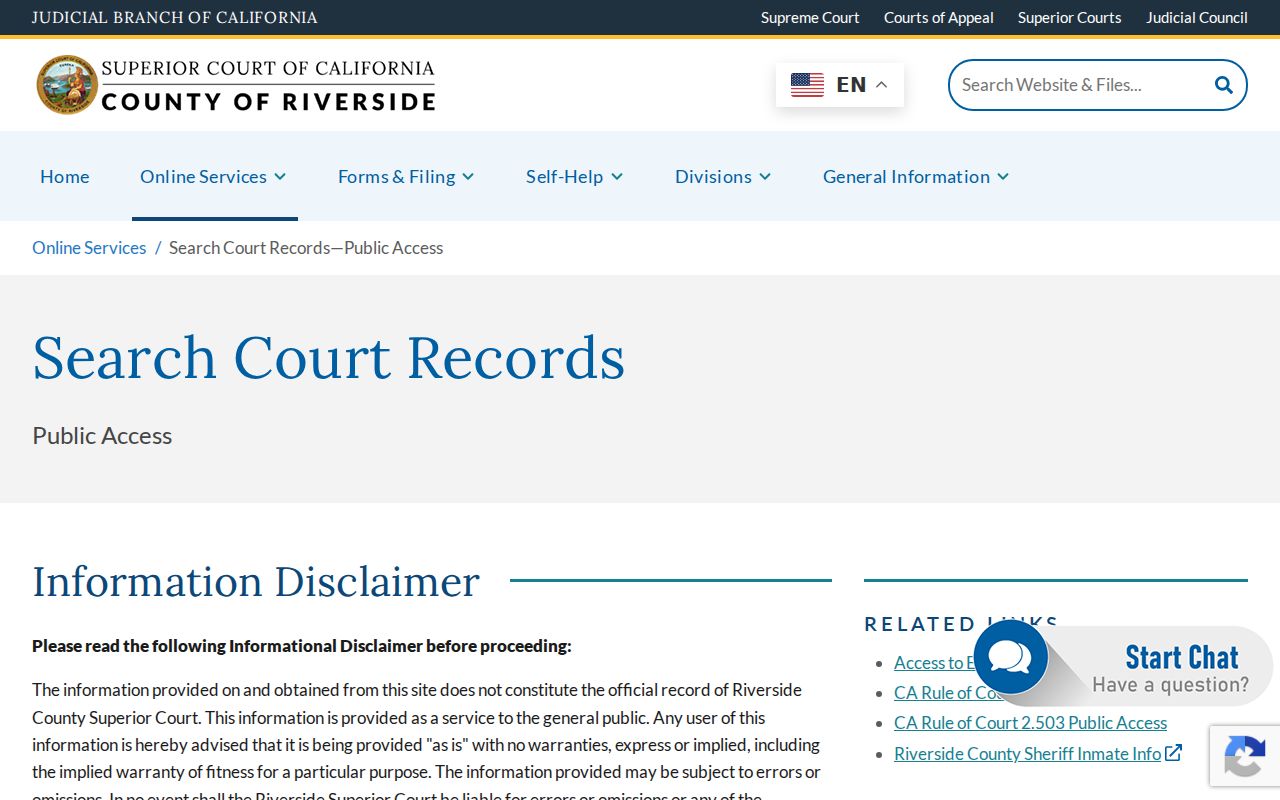
If online access does not fit the question, the RI-MC002 search and copy request can be sent by mail or delivered in person. It asks for contact details, party names, approximate filing year, case type, document title or filing date if known, the requested search or copy, and delivery or payment information. A clerk search returns case-number information; it is not an automatic request for an entire file.
Coachella Files Through NextRequest
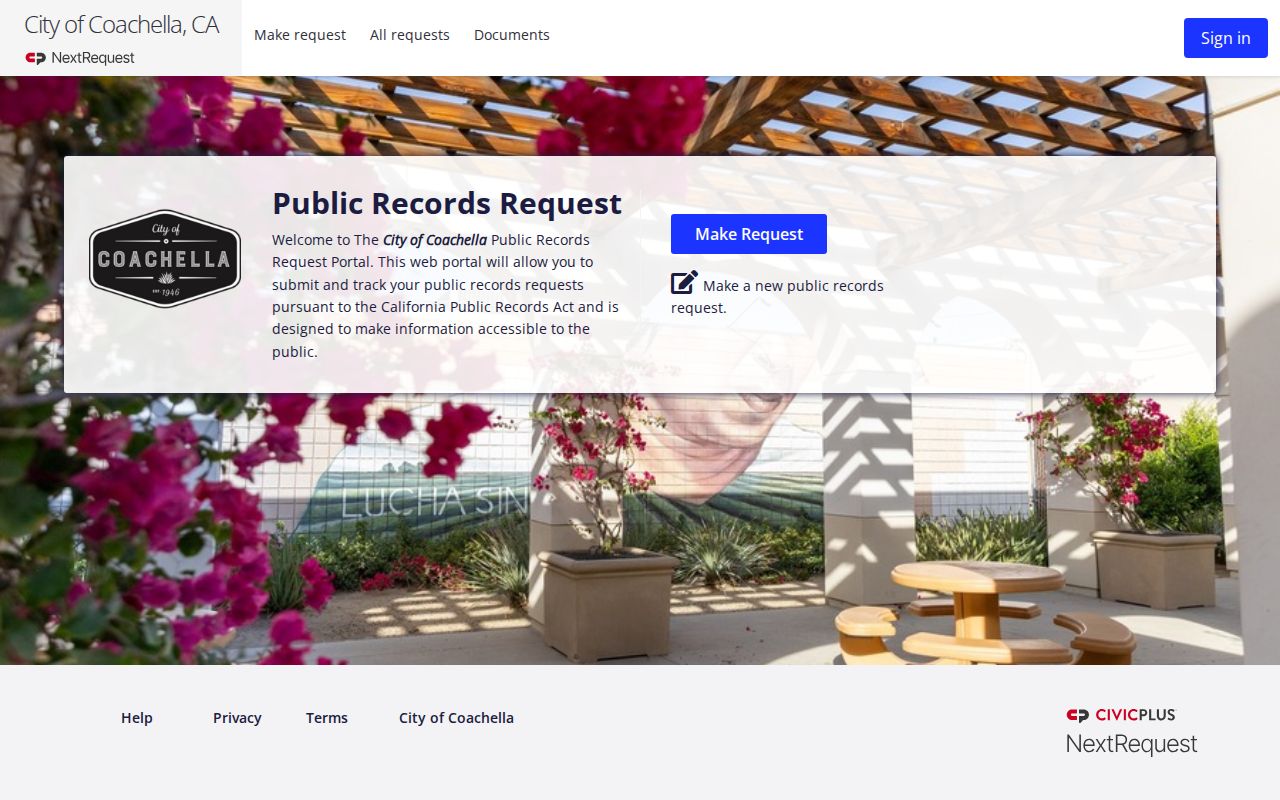
The City Clerk is the right starting point for existing city records such as certified minutes, resolutions, ordinances, agreements, contracts, and other municipal writings. Coachella’s NextRequest portal lets a requester describe the records, track the response, and receive a notice about availability, production time, and cost. The City Clerk request guidance explains the determination timeline and fee notice. A focused request gives a department, date span, address or APN, project or permit number, and preferred electronic format. A request should ask for an existing record, not ask staff to create a new resident directory or answer a broad question.
Development Services is the custodian for building permits and code-enforcement material inside city limits. An address request may seek an application, issued permit, inspection card, certificate of occupancy, named applicant or contractor, and records of completed work, subject to exemptions. Active development reports cover current amendments, zone changes, subdivision maps, architectural review, conditional-use permits, and variances. Completed or expired projects are removed from those reports, making a narrowly described NextRequest request the historical fallback.
The Coachella NextRequest portal is the city’s online channel for public-record descriptions and request tracking.
City Connect or SeeClickFix reports can expose issue text, location, and a display name unless submitted anonymously. A displayed name identifies the report or civic interaction, not necessarily an owner or resident. Police and incident material follows the Riverside County Sheriff route and may be restricted by victim, juvenile, medical, or active-investigation protections.
Official Rolls Versus Paid Finders
Commercial people-finder tools can be a quick lead, but they compile mixed public and purchased data. They may merge people with similar names, preserve old addresses, or present a filing address as a home. Their labels do not change what California law allows, and a copied profile is not a certified county or court result. Official sources take more steps because each custodian limits the record to its actual purpose.
| Route | Useful for | What to verify |
|---|---|---|
| Riverside assessor and ACR | Parcel, ownership inspection, deeds, and legal descriptions | Roll date, APN, party role, document image or copy |
| Riverside Superior Court | Case roles, dates, probate, and public docket events | Case number, division, identity anchors, access limits |
| State and city sources | Voter self-status, licenses, businesses, permits, and civic records | Purpose, current custodian, filing address versus personal location |
| Library and archives | Historical households, community context, and past addresses | Exact volume, edition, catalog scope, and source date |
A free index can still lead to a paid copy. A public page can still omit protected material. The cleanest Coachella residents directory workflow records the source, date checked, field searched, and reason a result was accepted or rejected.
Historical Coachella Resident Directories
No official source located in the research publishes a complete standalone Coachella city-directory run with a first and last year. That gap is meaningful. Coachella began as a Southern Pacific siding and agricultural settlement around 1898 and incorporated in 1946. Older households may appear in Coachella Valley, Indio, Palm Springs-area, or telephone-directory titles rather than a long Polk-style Coachella volume. The Riverside County Library System catalog and the Coachella branch are the place to ask staff to search title, subject, and keyword records, including noncirculating local-history holdings.
The Coachella Valley History Museum in Indio is the strongest documented local archive. Its appointment-only repository spans more than 100 years and names newspapers, magazines, business licenses, photographs, documents, and records. A directory absence can therefore be filled with a newspaper notice, a business license, a family photograph, an oral history, or a deed. The full collection and reading method belong on the Coachella city directory page.
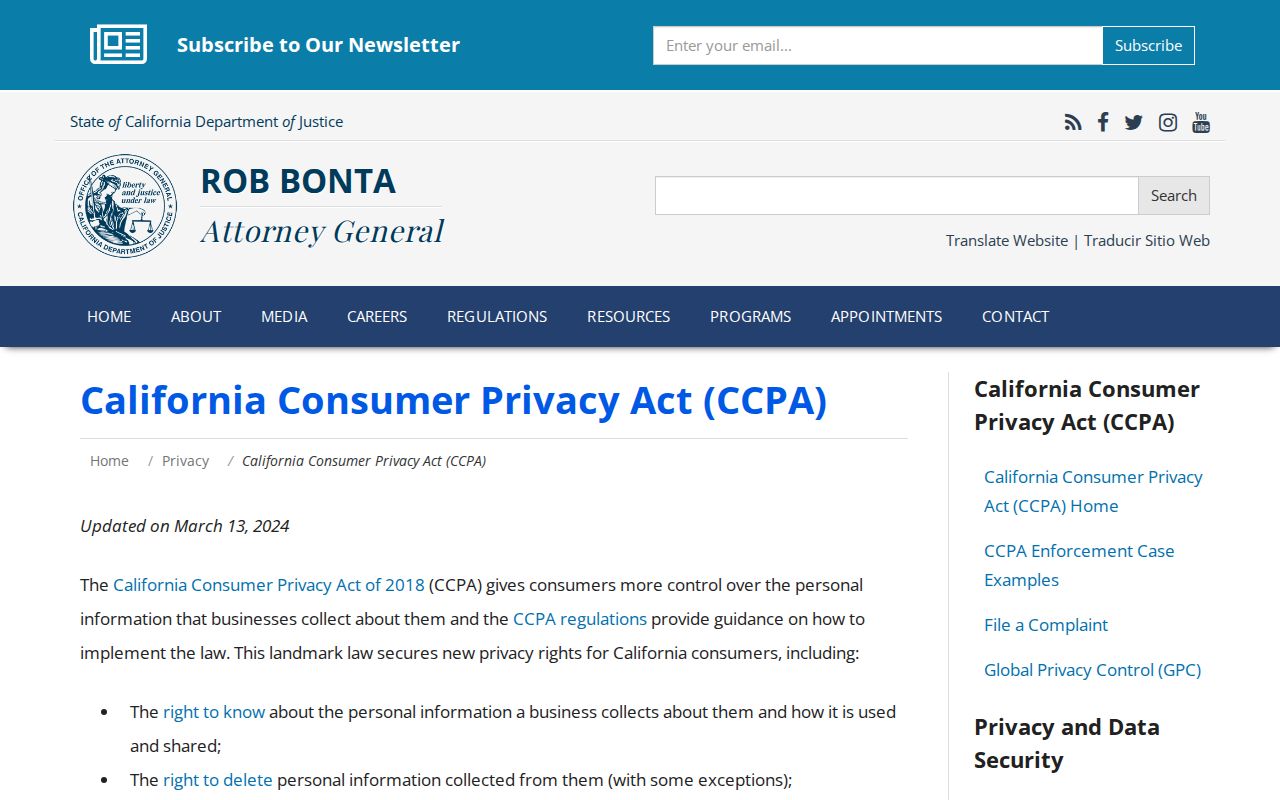
The California Attorney General privacy guidance explains consumer-data rights that matter when a commercial record copy is wrong or outdated.
Federal population schedules for 1900 through 1950 are public under the 72-year release rule. Pair a census household with a directory or telephone volume from an intervening year, then use the recorder or obituary trail to test an address move. Census QuickFacts for Coachella supplies city-level context, not a household roster. Rural routes, tract descriptions, compound surnames, initials, married names, and missing diacritics make exact spelling less reliable than a set of related clues.
Coachella’s Railroad and Farm Record Trail
Coachella’s history shapes the records that survive. Southern Pacific access and the export of dates, citrus, and vegetables placed people in railroad, grower, irrigation, packing, shipping, and community records. The Coachella Valley History Museum’s Japanese Memorial Garden, Desert Cahuilla room, railroad, fire-department, water and agriculture exhibits offer search terms when a surname-only catalog query fails. Ask for a person, business or organization, decade, crop or industry, street or tract, and desired format.
Record language can shift with the landscape. Early rural property may be described by township, tract, ranch, irrigation district, crossroads, or route instead of a modern house number. Coachella’s name itself appears in competing Coahuilla and Conchilla forms in historical context. Preserve those variants in a search log. A local founder’s two reported birth years also show why a date range can be more honest than forcing one value into every index.
| Clue | Useful follow-up |
|---|---|
| Railroad or station reference | Search newspapers, maps, business files, and local history by the siding or route. |
| Grower, packing, or irrigation term | Ask the museum about agriculture, water, business-license, and community holdings. |
| Tract, avenue, or crossroads | Compare legal description, APN, county GIS, and historical maps. |
| Variant surname or place spelling | Try compound, hyphenated, accented, initialed, married-name, and alternate place forms. |
Note: Digital abundance follows recent development activity in Coachella; older family evidence may remain in paper, photographs, newspapers, deeds, and assessment records.
Where the Coachella Trail Ends
Riverside County’s record systems have different dates and retention rules. The recorder’s online index begins January 1, 1974, office computers reach back to 1975, and earlier deed research is routed to Gateway Riverside. Court digitization varies by division: Indio civil begins in the early 1990s, family in 1992, probate in 1994, felony in 1990, and misdemeanor in 1993. Government Code section 68152 retention can mean that an older case was purged. Not finding an online result does not prove that no record ever existed.
County and city public-record requests are a fallback for a reasonably described existing record. Under the California Public Records Act, Government Code sections 7920.000 and following, an agency ordinarily determines a request within ten calendar days and may extend that time by up to fourteen days in specified unusual circumstances. Agencies need not create a new directory, answer a research question, or release exempt material. A narrow APN, date span, department, document type, and preferred format gives the custodian a workable target.
The same rule applies to archive gaps. The library page does not enumerate a Coachella city-directory run, the local Sanborn edition was not verified, and no official citywide neighborhood-association roster was found. Those are research boundaries. They are best handled by asking the custodian or archivist what is actually held, not by filling the gap with a generic claim.
Finding Heirs, Classmates, and Businesses
A Coachella residents directory can support personal research when the goal is carefully defined. An heir trail may begin with a decedent’s probate case, continue through public petitions or notices, and close with a deed or obituary. A former classmate may be found through library, alumni, or archive yearbooks, while school records themselves remain protected. A birth-parent search uses California’s official adoption-information and consent procedures because adoption files are confidential. If a question is specifically about custody rather than residence, keep it separate: the Riverside County Sheriff inmate search and California CDCR CIRIS are status channels, and an inmate result does not prove a Coachella address. Each route respects the record type instead of turning every source into a name list.
Business research follows a different chain. California Secretary of State bizfile can connect an entity name to status, agent, filings, and addresses. Riverside ACR fictitious-business-name records, city permits, and professional-license searches can identify the legal or occupational context behind a local business name. A registered-agent or filing address is not proof of a personal residence. For a disputed result, ask the custodian to correct the source record rather than trying to edit a copied profile.
Keep two independent anchors in the notes: name plus APN, case number, license number, relative, date, or address. Compound Spanish surnames, initials, married names, punctuation, spacing, and diacritics can split one person across indexes. California’s 2026 vital-record changes allow specified diacritical marks on new or amended records, so older indexes may still use a plainer spelling.
Protected Addresses and Lawful Limits
Some absences are intentional. California Safe at Home provides a substitute mailing address for qualifying survivors and reproductive-health workers or patients, while protected voter provisions can withhold an address. The federal Driver’s Privacy Protection Act restricts motor-vehicle residence data. Court, vital, voter, and police records also carry their own sealing, redaction, eligibility, and purpose rules. A blank result can reflect protection, not a lack of identity.
Use records for lawful personal research. Do not use a Coachella residents directory, a court result, a voter record, or an address clue to stalk, harass, intimidate, or harm anyone. Verify with the responsible custodian before relying on a record.
California stalking, criminal-threat, harassment, identity-theft, and voter-data laws can apply when information is weaponized. A relative or heir search should use the smallest useful set of facts. Do not publish protected addresses, infer a home from an office listing, or treat a public display name as a resident. The goal is a defensible research trail: source, date, scope, and a reason the record fits.